Leviticus 23:1-25:23
~ Click here to read today’s Scripture on BibleGateway.com ~ // Mobile Site Link
~ Listen to today’s Scripture on ESV Online.org ~
function googleTranslateElementInit() {
new google.translate.TranslateElement({
pageLanguage: ‘en’
}, ‘google_translate_element’);
}
http://translate.google.com/translate_a/element.js?cb=googleTranslateElementInit
Today in Leviticus chapter 23 we read about the Appointed Festivals! The NIV Study Bible has a great chart summarizing the Old Testament Feasts and Other Sacred Days, which is significantly paraphrased below with just Name & Purpose:
1. Sabbath – Rest for people and animals
2. Sabbath Year – Rest for land.
3. Year of Jubilee – Help for poor; stabilize society.
4. Passover – Remember Israel’s deliverance from Egypt.
5. Unleavened Bread – Remember how the Lord brought the Israelites out of Egypt in haste.
6. Firstfruits – Recognize the Lord’s bounty in the land.
7. Weeks (Pentecost or Harvest) – Show joy and thankfulness for the Lord’s blessing of harvest.
8. Trumpets (Rosh Hashanah-New Year’s Day) – Present Israel before the Lord for his favor.
9. Day of Atonement (Yom Kippur) – Atone for the sins of priests and people and purify the Holy Place.
10. Tabernacles (Booths or Ingathering) – Memorialize the journey from Egypt to Canaan; give thanks for the productivity of Canaan.
11. Sacred Assembly – Commemorate the closing of the cycle of feasts.
12. Purim – Remind the Israelites of their national deliverance in the time of Esther.
13. Hanukkah (Feast of Dedication or Festival of Lights) – Commemorated the purification of the temple and altar in the Maccabean period.
14. New moons were also often special feast days.
(Above is from Zondervan’s “NIV Study Bible” pp. 176-177) Below is a Jewish calendar, which includes many of the feasts and sacred days listed above:
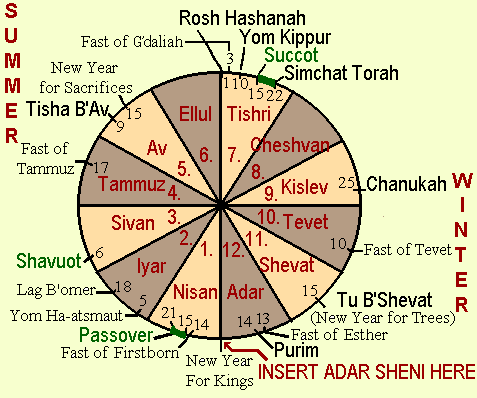
Bible.org’s commentary on Leviticus chapter 23 titled “The Lord’s Appointed Times” is at this link.
Today in Leviticus chapter 24 we read the well known law of retaliation from verses 19 & 20: “Anyone who injures another person must be dealt with according to the injury inflicted– fracture for fracture, eye for eye, tooth for tooth. Whatever anyone does to hurt another person must be paid back in kind.” I’ve read commentaries that say that this law of retaliation was actually compassionate for its time – in that it limited what one person could to another person in a very lawless age. If you lost an eye, you could take an eye – but you could not kill in return, for example. So, I see the logic behind saying that the law of retaliation limited punishments…. but, I also think we would do well to remember Jesus’ words in the Sermon on the Mount where he quotes from Leviticus 24 verse 20 in Matthew chapter 5 verse 38 & 39: “You have heard that it was said, ‘Eye for eye, and tooth for tooth.’ But I tell you, Do not resist an evil person. If someone strikes you on the right cheek, turn to him the other also.” Jesus teaches that there is a higher law of love that is better than the law of retaliation. Commentary on Leviticus chapter 24 titled “The Lamp, the Loaves and The Loudmouth” 🙂 is at Bible.org at this link. Commentary on Leviticus chapter 25 is at this link and at this link.

Well, I learned something new! This is pretty awesome – the Liberty Bell in Philadelphia is so named because this statement from Leviticus chapter 25 verse 10 is written on the bell: “Proclaim Liberty throughout all the land unto all the inhabitants thereof.” (which you won’t be able to see well in this photo below – I believe the inscription is around the top of the bell, where you’ll see 2 lines near the top and can make out the word “Proclaim.”)
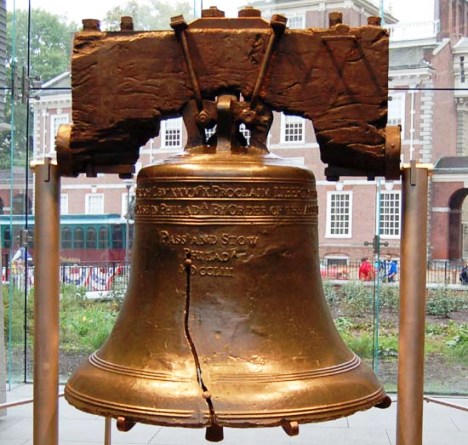
In Leviticus 25 verses 9 & 10 today we read: “Then on the Day of Atonement of the fiftieth year, blow the trumpets loud and long throughout the land. This year will be set apart as holy, a time to proclaim release for all who live there. It will be a jubilee year for you, when each of you returns to the lands that belonged to your ancestors and rejoins your clan.”
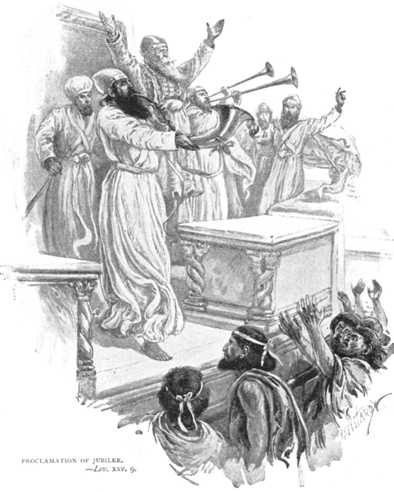
Worship God: Today’s readings in Leviticus about the year of Jubilee reminded me of the song “Days of Elijah,” sung here by Donnie McClurkin:
http://www.youtube.com/watch?v=Qb00G9euI98
Is it the year of Jubilee for you? Click here for Jubilee!
Please join us in memorizing and meditating on a verse of Scripture today: “Follow my decrees and be careful to obey my laws, and you will live safely in the land.” Leviticus 25:18 NIV
Prayer Point: Pray that you are careful follow God’s decrees and laws through your saving faith in Jesus Christ as your Lord and Savior.
Comments from You: What verses or insights stand out to you in today’s readings? Please post up by clicking on the “Comments” link below!
God bless,
Mike

 Chronological Bible Blog
Leave a comment