Exodus 4:18-7:13
~ Click here to read today’s Scripture on BibleGateway.com ~ // Mobile Site Link
~ Listen to today’s Scripture on ESV Online.org ~
function googleTranslateElementInit() {
new google.translate.TranslateElement({
pageLanguage: ‘en’
}, ‘google_translate_element’);
}
http://translate.google.com/translate_a/element.js?cb=googleTranslateElementInit
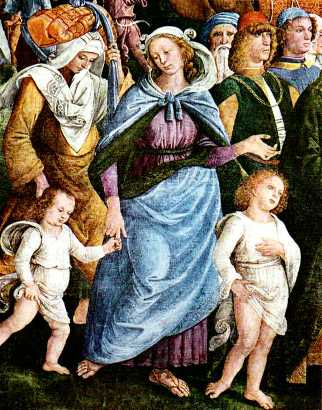
Exodus chapter 4, verses 24 through 26 probably raised some questions for you today… 🙂 “On the journey, when Moses and his family had stopped for the night, the LORD confronted Moses and was about to kill him. But Zipporah, his wife, took a flint knife and circumcised her son….After that, the LORD left him alone.” The obvious question being, why was God about to kill Moses? Didn’t God just call Moses to lead the Israelites out of Egypt? Well, yes he did. Commentaries I read suggest that the primary issue here was an issue of obedience. Moses had not circumcised his son, which was a requirement of God’s covenant with Israel from Genesis chapter 17 – you’ll recall Abraham and his household all getting circumcised in that 1 day. So, Moses – and actually Zipporah his wife performed the task of the covenant – had to circumcise his son before God would let Moses go forward to deliver God’s people out of Egypt. Don’t you like it when the Bible throws in some quick curveballs like this? 🙂 Bible.org’s commentary on Exodus chapter 4 is at this link – scroll down a bit. Below is an image from the Sistine Chapel of Zipporah and her and Moses’ two sons Gershom and Eliezer:
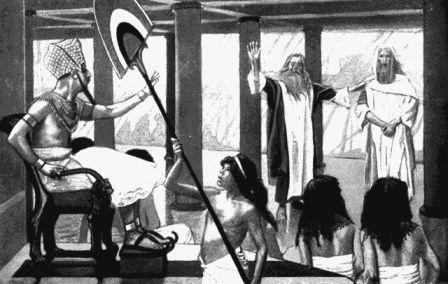
I like Exodus chapter 5 verse 1, which builds upon some of our readings in chapter 4: “After this presentation to Israel’s leaders, Moses and Aaron went to see Pharaoh.” What I like about this is that there was Moses & Aaron going to see Pharaoh – the 2 of them. This reminds me of Jesus sending out the disciples in pairs. Sometimes in life it seems like we can accomplish more, or stay on task better, if we are partnered with someone else. It’s sometimes tough to do things on our own. I think sometimes we want to make ourselves out to be Lone Rangers – thinking that we can shoulder the weight of the world on our own. But… we can’t. First and foremost we need to be in relationship with God through Jesus. Secondly, in relationship with our family. Thirdly, relationship with our community – as we saw Moses and Aaron spoke with the Hebrew leaders at the end of chapter 4. And then… we are ready to take on Pharaoh! Then, we are ready to take on the world! Yeah, sure, on rare occasions God will call us to pull off Kingdom tasks on our own – but… 9 times out of 10, I think you are going to need brothers and sisters in Christ to help you make it. Currently, are you in a community, a church, with brothers and sisters in Christ? Do you know who your Aaron is??? Below is a painting by James Tissot of Moses and Aaron before Pharaoh –
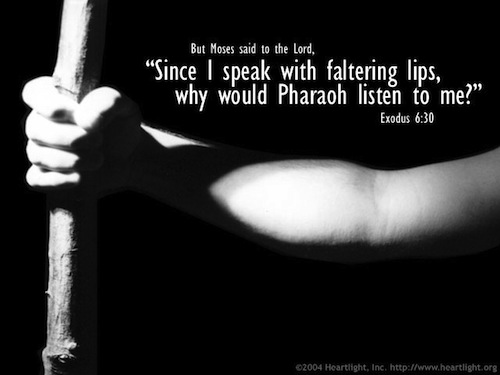
Exodus Chapter 5 verse 22 starts off our readings today with what seems to be an awfully bold question & complaint from Moses to God: “So Moses went back to the LORD and protested, “Why have you mistreated your own people like this, Lord? Why did you send me? Since I gave Pharaoh your message, he has been even more brutal to your people. You have not even begun to rescue them!”” That first question initially made me wince – obviously God was not mistreating his own people – Pharaoh and the foremen were. I don’t fault Moses for this question, since he saw the Israelites suffering so much – and God didn’t seem to fault Moses either as we see in the beginning of chapter 6 he tells Moses what he is going to do to Pharaoh – and he doesn’t address Moses question & complaint. I think Moses was probably really instead trying to ask God what he gets at in the last sentence – why haven’t you started your rescue of your people? Then, the second question in verse 22 above takes us back to Moses’ words to God at the burning bush near Midian when God first called Moses to this task – “why me??” This second question kind of made me smile… I guess because I’ve probably asked this question of God a lot of times in my life in various forms – why are you asking me to do this? Why not pick someone else? Don’t I have enough going on? How am I going to pull this off? Etc. Etc…. Etc…. any of these questions sound familiar to you? 🙂 And yet, even in the midst of this protesting, God is still going to use Moses in a big way for his Kingdom purposes. I pray he will still use me in the midst of my protesting. Do you want God to still use you in the midst of your protesting? What’s your protesting all about?
At the end of Exodus chapter 6 today we come across a short genealogy – only 3 of Jacob/Israel’s son’s are listed – as the third son, Levi, brings us to Aaron and Moses. I liked coming across this genealogy in today’s readings. It’s kind of a brief interlude in the “action” of the narrative. It’s kind of like God saying to us – pay attention! These 2 guys, Aaron and Moses were real! Here’s their real genealogy. This is a real factual history. And maybe this genealogy helps remind us of the reality of this book of Exodus before we soon get into the plagues… Below is an image of Moses and Aaron before Pharaoh by an unknown Netherlands or French artist from the mid-16th century – (image courtesy of metmuseum.org)
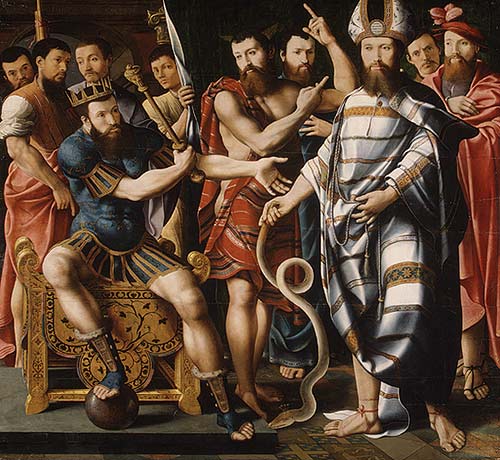
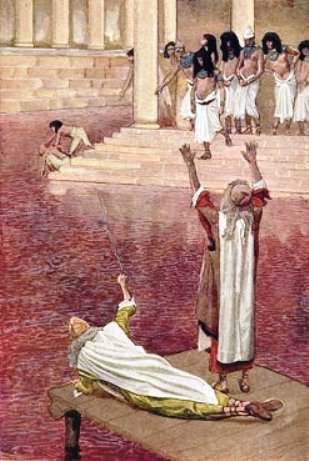
In Exodus chapter 7 we read about Aaron’s staff becoming a snake and the plague of blood. It is interesting that Pharaoh’s wise men & magicians did the same thing as these miracles with their “secret arts.” However, it’s obvious that what the magicians did was not as powerful as what God did – because God’s snake wins! 🙂 And, it is indeed ironic that the magicians turning water to blood would really only make matters worse for the Egyptians. I read commentaries that suggested the magicians were either coming up with illusions or potentially tapping into dark / demonic forces to make their tricks come to fruition. Check out tons more great info on the nature of the plagues, the magicians tricks, the pattern of the plagues and the point of the plagues in Bob Deffinbaugh’s essay titled “The Finger of God” at bible.org at this link. This is worth the read before we dive into all the plagues over the next few days! Below is an image of the plague of blood along the river Nile:
Worship God: Today’s readings in Exodus about God’s discussions with Moses reminded me of the Hillsong song “Love Like Fire:”
http://www.youtube.com/watch?v=PHgg7QTunLE
Is your love like fire for God? Click here for Fire!
Please join us in memorizing and meditating on a verse of Scripture today: “Moses and Aaron did just as the LORD commanded them.” Exodus 7:6 NIV
Prayer Point: Pray that you will do just as the Lord commands you.
Comments from You: What verses or insights stand out to you in today’s readings? Please post up by clicking on the “Comments” link below!
God bless,
Mike

 Chronological Bible Blog
Leave a comment